Construction Noise Barriers for Miami & Brickell Job Sites
Comply with Miami City Code Chapter 36, Miami Beach §46-156(2), and December 2025 noise waiver compliance inspections with portable acoustic barriers that reduce construction noise by up to 43 dB
Local regulation overview
Miami Noise Regulations: Chapter 36 and Miami Beach §46-156(2)
Miami City Code Chapter 36 establishes construction noise limits based on property line measurements at residential areas. The primary requirement is that construction noise shall not exceed 60 dBA (A-weighted decibels) at the residential property line during nighttime hours (typically 10 PM to 7 AM, pending revision to 7 AM to 7 AM). Violations are enforced by the Miami Building Department and result in fines starting at $5,000 per violation, with escalating penalties for repeat offenses.
Miami Beach Municipal Code Section 46-156(2) establishes a more granular, time-of-day escalating schedule. From 8 AM to 5 PM, the noise limit is 75 dBA. From 5 PM to 10 PM, it drops to 70 dBA. From 10 PM to 7 AM, the limit is 60 dBA. This escalating structure means that even compliant daytime work may require barriers as evening hours approach. The Miami Beach Code Compliance Office enforces these limits and can suspend or revoke active waivers for non-compliance.
For contractors, this means that Miami Beach sites require dynamic barrier deployment across the work day. Echo Barrier's portable, reusable design accommodates this requirement. Panels can be repositioned as work shifts from noisy to less-noisy tasks, maintaining compliance as time-of-day limits change.
Regulatory information last verified from public sources. Confirm with enforcing agency.
Noise Limit
Max penalty
Buffer / trigger
Work hours
Echo Barrier solution
for city job sites
Noise reduction
AKRF tested
Per panel
Distribution
Echo Barrier Performance and Miami Compliance
Echo Barrier reduces construction noise by up to 43 dB, as independently tested by acoustical engineers. Field testing demonstrates an STC (Sound Transmission Class) rating of 30 in real-world construction conditions, significantly outperforming standard 1.5-inch marine plywood hoarding. For Miami contractors trying to achieve the 60 dBA limit at residential property lines, a 43 dB reduction is typically sufficient to bring high-noise activities (pile driving, concrete cutting, demolition) into compliance.
Each panel weighs approximately 13 lbs and can be deployed by a two-person crew without heavy equipment. This weight advantage is crucial in Brickell's high-rise environment, where site access is limited and equipment must be moved via service elevators or temporarily installed shoring systems. For overnight or weekend work, panels can be quickly removed and redeployed, accommodating the escalating noise limits in Miami Beach's time-of-day schedule.
Echo Barrier panels are reusable across multiple projects. For contractors managing multiple sites across Miami-Dade County, the portfolio approach means that barriers deployed on one project can be relocated to the next site, spreading the cost across multiple projects and increasing ROI. This is particularly valuable for general contractors and construction management firms operating across the metro area.
Performance claims vary by site conditions and installation.
Ready to Stay Compliant? Get Your Free Quote Today
Echo Barrier's portable acoustic barriers reduce construction noise by up to 43 dB — helping you meet local regulations and avoid costly fines.
Echo Barrier vs plywood hoarding
See Why Contractors Choose Echo Barrier
Lightweight, reusable, and proven to cut noise by 43 dB. Request your free site assessment and learn how Echo Barrier keeps your projects on schedule.
City-specific compliance detail
December 2025 Noise Waiver Compliance Directive
In December 2025, Miami's Assistant City Manager issued an administrative directive that fundamentally changed construction noise compliance in the city. The directive states: "All construction sites currently operating under active noise waivers shall be subject to mandatory noise mitigation compliance inspections. Non-compliance results in immediate suspension or revocation of noise waiver authorization."
This directive creates an immediate and high-stakes compliance requirement for every contractor with an active noise waiver. Previously, waivers were primarily process documents that allowed construction during restricted hours. Now, the City is conducting inspections specifically to verify that contractors are actively implementing noise mitigation measures—and failure to do so results in waiver revocation and project shutdown.
For contractors with active waivers, this directive means that having a permit is no longer sufficient. Mitigation is mandatory. Echo Barrier provides the documented, verifiable noise reduction needed to satisfy compliance inspectors and protect the waiver investment. The financial impact of waiver revocation is severe: not only does the project face stop-work orders and delays, but the waiver itself becomes null, requiring a full reapplication process.
Brickell and High-Rise Construction Context
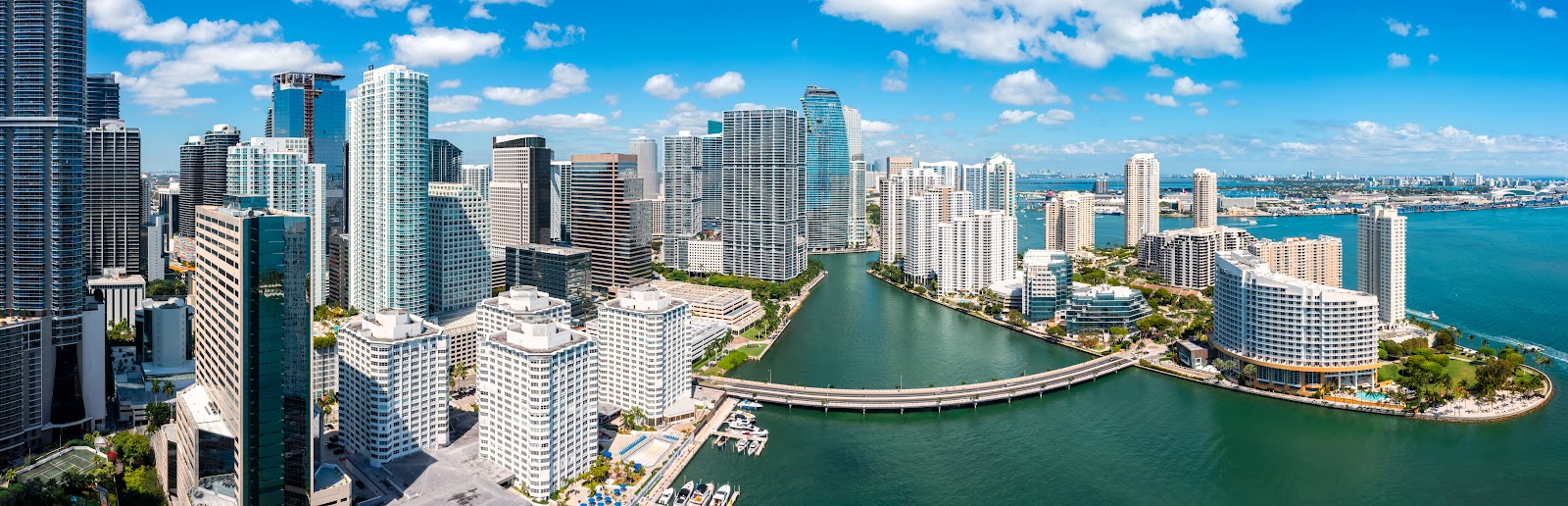
Brickell, downtown Miami's central business district, is one of North America's most densely developed construction markets. With residential towers occupied during construction, the 60 dBA residential property line limit becomes a practical constraint on nearly every work activity. Pile driving, excavation, concrete cutting, and other high-noise processes must be conducted behind barriers to meet the limit.
Unlike suburban construction sites where a 600-foot buffer might isolate a project from residences, Brickell's vertical development means that residential units exist immediately adjacent to active construction zones. A construction site in downtown Miami can have occupied residential units on both sides of the site. This density makes Echo Barrier's lightweight, high-performance design essential. Heavy, permanent sound walls are impractical in high-rise environments; portable barriers that can be deployed, repositioned, and redeployed across multiple zones are the only practical compliance solution.
Wynwood, Design District, Midtown, and Edgewater sites face similar constraints. These neighborhoods combine ongoing construction with dense residential occupation and relatively narrow lot lines. Echo Barrier's 43 dB noise reduction, achieved with panels weighing approximately 13 lbs each, is the solution these sites require.
Compliance Documentation and Waiver Protection
The December 2025 waiver compliance directive specifically requires contractors to document their mitigation measures. Echo Barrier provides independent acoustical testing (AKRF test reports) that serve as verifiable proof of noise reduction. During compliance inspections, contractors can demonstrate that their barrier system achieves 43 dB reduction—a documented, repeatable performance standard that satisfies Building Department and Code Compliance Office requirements.
For contractors seeking renewal of existing waivers or filing new waiver applications, the availability of documented noise mitigation significantly strengthens the application. Miami's permitting process now explicitly requests information about noise control measures. Echo Barrier's AKRF test report—showing specific dB reduction across frequency ranges—is a compliance document that City departments expect to see.
Frequently asked questions
Waiver revocation results in immediate work stoppages during restricted hours and requires full reapplication to the City. The project faces delays and increased costs. Implementing noise barriers is far more cost-effective than risk waiver revocation. Echo Barrier can be deployed same-week to protect the waiver through compliance inspections.
Yes. Echo Barrier panels weigh approximately 13 lbs each and can be installed by a two-person crew without heavy equipment—making them ideal for Brickell's space-constrained, high-rise environment. Panels can be deployed around active work zones, repositioned as work shifts, and removed overnight if required. Multiple panels can be stacked to create acoustic enclosures around specific noise sources.
Echo Barrier reduces noise by up to 43 dB, as independently verified by acoustical engineers. Field testing demonstrates an STC 30 rating in real-world construction conditions. For Miami contractors needing to meet the 60 dBA residential property line limit, a 43 dB reduction is typically sufficient for high-noise activities like pile driving and concrete cutting.
Miami City Code Chapter 36 sets a 60 dBA nighttime limit. Miami Beach Municipal Code §46-156(2) establishes an escalating time-of-day schedule: 75 dBA (8 AM–5 PM), 70 dBA (5 PM–10 PM), and 60 dBA (10 PM–7 AM). Miami Beach's more granular limits require dynamic barrier management throughout the work day.
In December 2025, Miami's Assistant City Manager issued a directive requiring that all construction sites operating under active noise waivers be subject to mandatory noise mitigation compliance inspections. Sites found non-compliant face immediate suspension or revocation of their noise waiver. This means contractors with existing permits must actively implement noise mitigation or risk project shutdown.
Miami Code Chapter 36 governs construction noise and establishes a 60 dBA limit at residential property lines during nighttime hours (typically 10 PM to 7 AM). The regulation applies to all construction sites within Miami city limits. Violations result in fines starting at $5,000 and can escalate for repeat offenses. The Miami Building Department enforces the code.
Plan a waiver-compliant Miami job site
Download the independent AKRF test report, or request a free quote tailored to your Miami project.